Showing posts with label beer. Show all posts

Thursday, 29 June 2017

Soccer Mad Boffins Present Paper at University of York Workshop on 'Interdisciplinary Approaches to the Study of Brands in Business'


An awesome chapter from this book was presented


Coinciding with The York Management School's increased emphasis on 'inter-disciplinarity', this workshop organized by the Centre for Evolution of Global Business and Institutions (CEGBI) brought together academic experts and PhD students from a diversity of disciplines, united by an interest in studying brands.

Dr Alex Gillett's made a presention 'Over the Bar!' that was based on the Soccer Mad Boffins' recent book chapter 'Beer and the Boro—A Perfect Match!' (Gillett, A., Tennent, K. and Hutchinson, F., 2016. Beer and the Boro—A Perfect Match!. In Brewing, Beer and Pubs (pp. 303-320). Palgrave Macmillan UK.)  The study focussed on the relationship between Middlesbrough Football Club and its relationship with two brewers, Camerons and Scottish & Newcastle, which invested money in the club during the 1980s.  Discussion then turned to the relationship between soccer clubs and alcohol more broadly, and in the contemporary context of a ‘scalloped’ industry comprising fewer but larger and more global players at one end and smaller ‘craft’ style breweries at the other, with an apparent reduction in the number of mid-sized regional breweries. 

Overall, an interesting event and a good showcase for our work.  An edited version of the slides presented on the day is available here as a .pdf file.

Sunday, 24 July 2016

Book Launch: Brewing, Beer and Pubs: A Global Perspective


We have previously mentioned in this blog the chapter we have written ('Beer and the Boro: A Perfect Match') included in the book Brewing, Beer and Pubs: A Global Perspective.


The book was officially launched last Friday evening with a reception and panel debate, at York Brewery (York, UK). Academic experts present included the editors Prof Ignazio Cabras (University of Northumbria), Prof David Higgins (Newcastle University), Prof Emeritus David Preece, and Prof Charles Bamforth (UC Davis, California). There were also many experts and industry representatives present which made the event so much more than a purely academic or purely 'practical' event.

The book, which is published in hardback and e-book by Palgrave and available to buy here, includes contributions from academics and experts from around, covering the history of beer and brewing, Britain's controversial tied pub system, alcohol tax, the importance of village pubs, and a host of other issues.


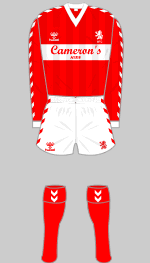
Our chapter ('Beer and the Boro: A Perfect Match' by Dr Alex Gillett, Dr Kevin Tennent, and Mr Fred Hutchinson) focuses on the relationship between Middlesbrough FC and two breweries (Camerons, and Scottish & Newcastle) in the 1980s, when Middlesbrough faced financial difficulties:

"The sport of Association Football (or ‘soccer’) was professionalised in the 19th century and for many years has enjoyed a close relationship with beer, since brewers, hoteliers and landlords noticed the financial opportunities brought about by clubs and their supporters.  Soccer has itself received much attention within mainstream media, although only minimal attention from academic business historians.  This paper presents a case study of Middlesbrough Football and Athletic Company Limited (MFAC), from its formation in 1876 until its eventual liquidation and rebirth in the summer of 1986.  We report on the important relationships that existed throughout that time between MFAC, breweries, and hostelries, and also discuss subsequent developments. In particular, we focus on the relationships between MFAC, and the brewers Camerons, and Scottish & Newcastle."


Middlesbrough FC wearing shirts sponsored by Camerons

The York Brewery produces a fantastic array of cask and bottled beers, including the ever-popular 'Guzzler' (a refreshing session beer, 3.6%).  They also offer a range of keg beers (although the kegging takes place  at Camerons 'Lion Brewery' in Hartlepool, which coincidently features prominently in our chapter.)  


Friday, 20 May 2016

Beer and the Boro - A Perfect Match!

 middlesbrough 1985-86

If your university of library has access to Springerlink, you can easily download the digital edition of our new book chapter 'Beer and the Boro - A Perfect Match!'


"Although football clubs (FCs) as firms are relatively unsustainable from a purely financial perspective, the club brands appear highly sustainable in comparison with many other industries (Kuper and Szymanski, 2012). While the ownership and the companies running the clubs may change, the club brands themselves appear to be more stable than in other industries where firms and brands go out of business, relocate or diversify to a far greater extent (e.g. Hannah, 1997). This may be because they are less vulnerable to competition — FCs have historically been geographic, and while their catchment area may shrink during less successful periods, it will not disappear entirely. Furthermore, rival foreign clubs do not enter and supply soccer at lower prices (although foreign investors may bid to take over the ownership) and although English clubs as a whole could fall behind foreign competitors and lose their best players, foreign clubs have their own problems of finance and management (Kuper and Szymanski, 2012). Put succinctly, society can keep unprofitable clubs going cheaply: bank managers and tax collectors have historically appeared reluctant to close century-old clubs -and so society swallowed the losses. Perhaps clubs were and still are too small to fail. At the same time, the brand loyalty of supporters means that no matter how lousy the product, a hard core of customers will continue to purchase: “Soccer is more than just a business. No one has their ashes scattered down the aisle at Tesco” (Taylor, 1998, cited by Kuper and Szymanski, 2012, p.82)."


In the chapter, we discuss the relationship between the beer and brewing industry and football in the 1980s, through the case of Middlesbrough FC, a club which experienced severe financial challenges during the 1980s.

So what are you waiting for - have a read, put it on your reading lists, cite it in your research. You know what to do!


http://link.springer.com/chapter/10.1057%2F9781137466181_16