Showing posts with label football predictions. Show all posts

Thursday, 14 June 2018

The 2018 FIFA World Cup is here!

The 2018 FIFA World Cup is finally upon us, and the excitement levels are rising at Soccer-Mad Boffins HQ!

It wouldn’t be a World Cup without wall charts, office sweep-stakes, and arguments about which teams will progress from the Group Stages and ultimately win the tournament!

Official FIFA world rankings have Germany in the number one spot (1558 points), with Brazil in second place (with 1431 points). 

Behind them the rest of the top-ten is more bunched on points; Belgium, Portugal, Argentina, Switzerland, France, Poland, Chile, and Spain are all strong teams.  Snapping their heels are Peru (just 1 point behind the Spanish), then Denmark and England, Uruguay, Mexico, Columbia and the Netherlands.

As Kuper and Syzmanski correctly identify, one of the most exciting things about football is that any team can beat another ‘on their day’.  It is the unpredictability and the hope of a giant-killing or a freak score-line that often has us on the edge of our seats.

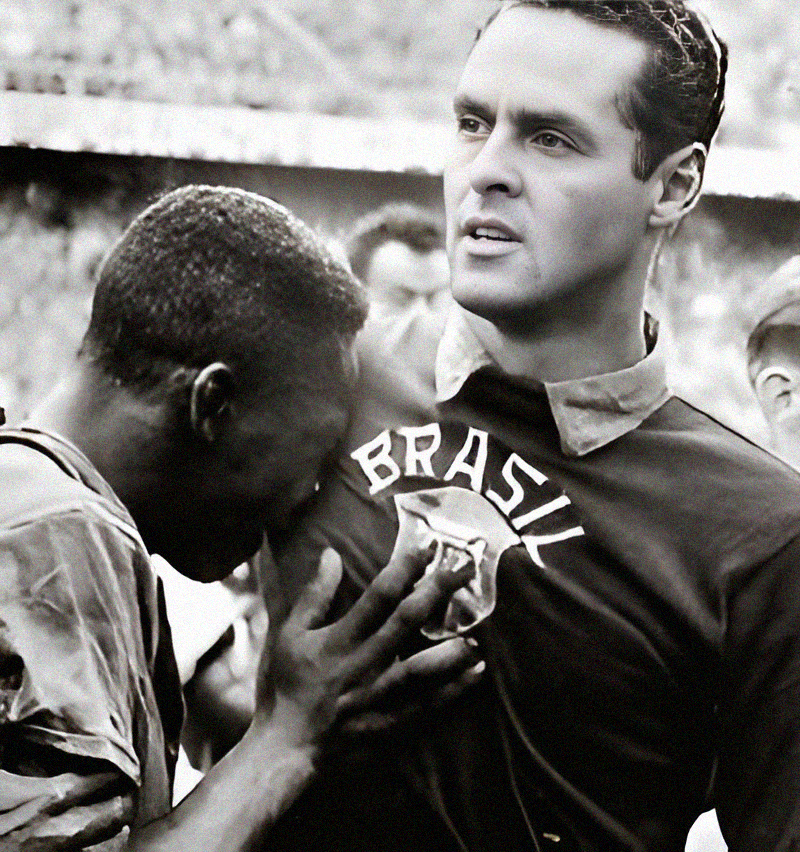
In 1950 the USA's part-timers beat England, ‘the home of football’ by 1-0.  Even between two heavyweight teams, there can be unpredictable score-lines -  in 2014 who predicted that Germany would thrash Brazil so convincingly 7-1?


Whilst FIFA rankings suggest that either Germany or Brazil are most likely to win this year’s World Cup, if either or both have an early exit then it looks as though the trophy could be any one’s. 

Belgium, Uruguay or Switzerland as finalists?  England to progress beyond the Quarter-Finals?

Just for fun, here at Soccer-Mad Boffins we made our own predictions using a World Cup spread-sheet downloaded from http://www.excely.com/football/2018-fifa-world-cup-schedule.shtml.

According to Alex’s calculations, Germany and Brazil will both reach the finals, with the German’s emerging as winners by a score-line of 2-1.  Third place will go to Portugal who will beat France 3-1 in the 3rd/4th place play-off.

Meanwhile, Kevin also predicts a Germany – Brazil final, with Germany winning 1-0 in a slightly more cautious or evenly-matched 90 minutes.  Kevin’s 3rd/4th place play-off is between Uruguay and Argentina – with Uruguay winning 2-1.

Just for fun we also conducted ‘the random world cup’ by rolling two dice.  The random factor generated some very interesting results. Here are some highlights:

-       Saudi Arabia to win Group A, Costa Rica to win Group E (with Brazil finishing bottom with just 1 point), and Tunisia to win Group G (England in second place, with Belgium surprisingly in third place and failing to progress). 

-       The dice took Denmark, Mexico, Argentina, and Switzerland into the semi-finals, with dramatic results: Firstly Mexico beat Denmark 5-2 in a seven-goal thriller, then Switzerland (the home of FIFA) dominated Argentine 6-0 to earn their place in the final.

-       The 3rd/4th place play-off was another goal-feast: Argentina beating Denmark 3-2, to claim ‘bronze’ (if this were the Olympic Games!)

-     World Cup Finals are often something of an anticlimax and ours was no exception with Switzerland winning 1-0 against Mexico, perhaps after a contentious penalty decision involving the use of the newly introduced VAR, leading to accusations in the English papers of a FIFA inside job!


We can't wait for the tournament to unfold and to see which of our predictions most resembles reality.  Which teams will emerge as a surprise package and shock the favorites?  Which players will hit form and have a breakout tournament? Will the beautiful game or parking the bus triumph? It's almost time to find out!

Download our predictions in full (needs Excel):

Saturday, 2 August 2014

The Guessing Game: Soccermeters Revisited

With the dust from the 2014 FIFA World Cup having settled the opportunity to revisit the 'soccermeters' published in the phoney war before the World Cup presents itself. These tools appeared as office timewasters in the weeks before the tournament with a mission to keep fans entertained before the big event got under way.  How did these now forgotten tools get on at predicting the outcome of the tournament?


Slate.com offered this soccermeter which eliminated teams from the competition on the basis of various footballing and non-footballing metrics. Footballing metrics seem roughly to fare better, 'tournament history' having predicting Brazil as winner, but Germany getting eliminated in the semis - although Italy were expected to face Brazil in the final. Slate also told us that Brazil would win on odds, although they would eliminate Germany in the semis and face Argentina in the final.  Germany's 7-1 victory over Brazil certainly stunned the betting markets. FIFA ranking proved a completely inaccurate predictor, placing Spain as winners, though at least they were expected to face Germany.  Under this model, however, Argentina would have been eliminated in the quarters and the Netherlands dropped out in the group stages.  


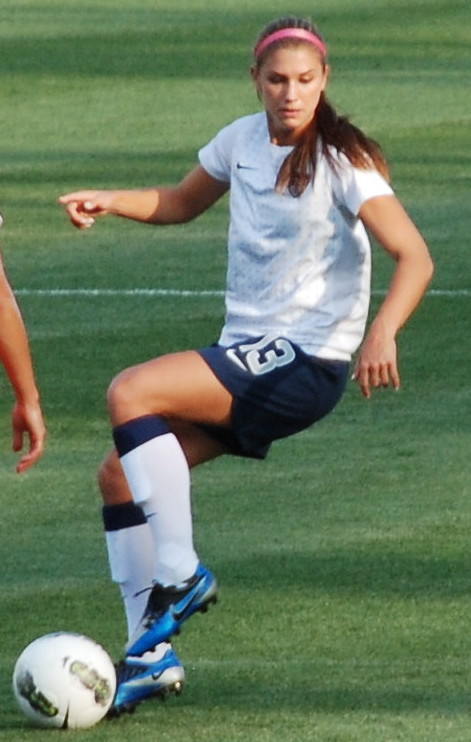
The Women's Soccer metric showed, perhaps, how far behind the 'established' nations are in women's football, with the United States predicted to win, although beating Germany in the final - England and Japan being expected to reach the semis! Economic indictors also favoured the US, placing the nation top in terms of wealth (on GDP per capita terms) and population.  


With wealth placing Australia as runners up, unsurprisingly neither factor was particularly decisive, though the wealth metric did see Germany and the Netherlands reach the semis. If UN Security Council membership was used, England would triumph.  Political importance doesn't improve footballing performance then.  Much to the likely chagrin of Greek, and southern European observers more generally, Germany does triumph under one economic metric - Standard and Poor rating.  Perhaps this puts a new complexion on the images of Angela Merkel celebrating with her nation's triumphant footballers.  And, if we were to believe that correlation leads to causation, adds new urgency to the need for Britain to get its national debt under control...


The Economist's Daily Chart on June 4th offered another attempt to predict the tournament.  They provided a 'probability circle' along with a straight bar graph of probability of winning the tournament, working on the premise that experience matters. The data was based on the outcome of every FIFA game since 1993 adjusted for ranking when the teams played each other and home advantage. Brazil were heavily favoured under this particularly soccernomic methodology, with a formidable 21% chance of lifting the cup. The Germans had only a 7.5% chance of winning the cup, and also only a 7.5% chance of getting past Brazil in the semis.  The Economist's prediction would suggest that Germany managed to play above the expected level, although it would seem more likely that they over-rated home advantage.  The use of historical data did also not fare well, perhaps suggesting they also over-estimated the role of path dependence - Spain were given a 7.6% chance of winning, marginally better than Germany, while Portgual were rated fourth on 6.9%.  England were perhaps more realistically rated at 3%, and Argentina at 6.4%, but the Netherlands were considered complete outsiders at 2.3%.  


As the outcome of a football match depends heavily on the players on the day, along with a dose of luck, trying to use the types of data that were used by the aforementioned tools to predict football matches seems in some ways to be a fool's errand. But it is an entertaining topic and we applaud these two attempts at soccer meters which have added greatly to the excitement and enjoyment of the 2014 FIFA World Cup. 

In conclusion - if you want to predict the tournament then it would surely be wiser to use the data that betting companies draw upon when calculating their odds, or better still to find out how Paul the Octopus did it in 2010!