Showing posts with label Brazil. Show all posts

Thursday, 14 June 2018

The 2018 FIFA World Cup is here!

The 2018 FIFA World Cup is finally upon us, and the excitement levels are rising at Soccer-Mad Boffins HQ!

It wouldn’t be a World Cup without wall charts, office sweep-stakes, and arguments about which teams will progress from the Group Stages and ultimately win the tournament!

Official FIFA world rankings have Germany in the number one spot (1558 points), with Brazil in second place (with 1431 points). 

Behind them the rest of the top-ten is more bunched on points; Belgium, Portugal, Argentina, Switzerland, France, Poland, Chile, and Spain are all strong teams.  Snapping their heels are Peru (just 1 point behind the Spanish), then Denmark and England, Uruguay, Mexico, Columbia and the Netherlands.

As Kuper and Syzmanski correctly identify, one of the most exciting things about football is that any team can beat another ‘on their day’.  It is the unpredictability and the hope of a giant-killing or a freak score-line that often has us on the edge of our seats.

In 1950 the USA's part-timers beat England, ‘the home of football’ by 1-0.  Even between two heavyweight teams, there can be unpredictable score-lines -  in 2014 who predicted that Germany would thrash Brazil so convincingly 7-1?


Whilst FIFA rankings suggest that either Germany or Brazil are most likely to win this year’s World Cup, if either or both have an early exit then it looks as though the trophy could be any one’s. 

Belgium, Uruguay or Switzerland as finalists?  England to progress beyond the Quarter-Finals?

Just for fun, here at Soccer-Mad Boffins we made our own predictions using a World Cup spread-sheet downloaded from http://www.excely.com/football/2018-fifa-world-cup-schedule.shtml.

According to Alex’s calculations, Germany and Brazil will both reach the finals, with the German’s emerging as winners by a score-line of 2-1.  Third place will go to Portugal who will beat France 3-1 in the 3rd/4th place play-off.

Meanwhile, Kevin also predicts a Germany – Brazil final, with Germany winning 1-0 in a slightly more cautious or evenly-matched 90 minutes.  Kevin’s 3rd/4th place play-off is between Uruguay and Argentina – with Uruguay winning 2-1.

Just for fun we also conducted ‘the random world cup’ by rolling two dice.  The random factor generated some very interesting results. Here are some highlights:

-       Saudi Arabia to win Group A, Costa Rica to win Group E (with Brazil finishing bottom with just 1 point), and Tunisia to win Group G (England in second place, with Belgium surprisingly in third place and failing to progress). 

-       The dice took Denmark, Mexico, Argentina, and Switzerland into the semi-finals, with dramatic results: Firstly Mexico beat Denmark 5-2 in a seven-goal thriller, then Switzerland (the home of FIFA) dominated Argentine 6-0 to earn their place in the final.

-       The 3rd/4th place play-off was another goal-feast: Argentina beating Denmark 3-2, to claim ‘bronze’ (if this were the Olympic Games!)

-     World Cup Finals are often something of an anticlimax and ours was no exception with Switzerland winning 1-0 against Mexico, perhaps after a contentious penalty decision involving the use of the newly introduced VAR, leading to accusations in the English papers of a FIFA inside job!


We can't wait for the tournament to unfold and to see which of our predictions most resembles reality.  Which teams will emerge as a surprise package and shock the favorites?  Which players will hit form and have a breakout tournament? Will the beautiful game or parking the bus triumph? It's almost time to find out!

Download our predictions in full (needs Excel):

Tuesday, 2 August 2016

Rio 2016 kicks off!

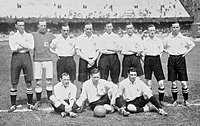
Great Britain's Gold Winning side of 1912
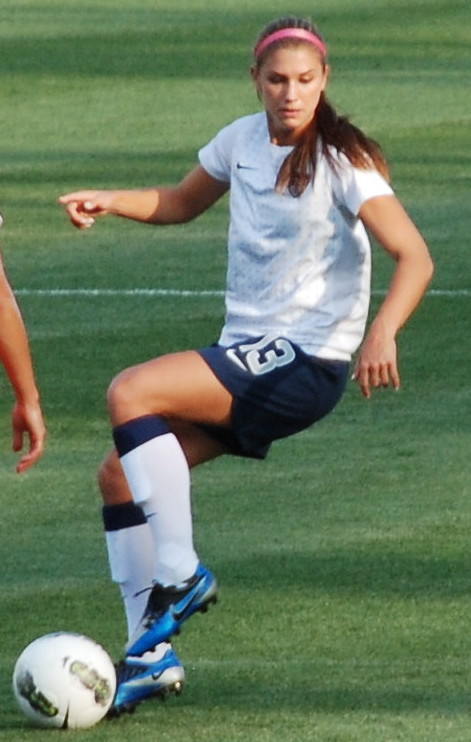
August is upon us, and the next Summer Olympic games, in Rio de Janiero, Brazil, officially starts on Friday 5th August with the Opening Ceremony.  The Summer Olympiad now contains 28 sports, with numerous sub-disciplines contained within, but an often overlooked yet historically important part of the games is the soccer tournament, held simultaneously for both men and women.  The soccer tournament will start on Wednesday 3rd August with Women's first round games between Sweden and South Africa, and Canada and Australia.

The men's tournament, officially first held at White City Stadium at the London 1908 Games is historically important because it was the first truly international soccer tournament to take place between teams representing individual nations, except for the British Home Championship, which had been contested since 1884. The 1908 tournament saw Great Britain beat Denmark 2-0 to claim the gold medal - the Netherlands, Sweden and France also took part in the competition, France even entering a 'B' team in an era before participation rules were sharpened up.  The tournament became the de-facto World Championship until the establishment of the FIFA World Cup in 1930.  Soccer missed the 1932 Los Angeles Olympics but still remained a presence at later Games despite the IOC and FIFA not seeing eye-to-eye for many years about the detail of soccer's participation, soccer being a professional sport in most countries yet Olympic athletes being strictly amateurs.  A compromise was eventually reached for the men's event that each team was limited to only three players per team with an age of more than 23, disqualifying most 'star' players from taking part.  As a result the women's tournament, which was only established as late as 1996, now in reality takes precedence, with current World Cup holders and five times gold medal winners the USA favourites to maintain their grip on the event.

Given the England women's good performance in the 2015 tournament in Canada, the non-inclusion of a Great Britain side at Rio 2016 due to the four British Football Association's inability to compromise on an Olympic team due to the fear of compromising their separate FIFA memberships seems particularly unfortunate. Despite being the inaugural gold winners and wining gold again in Stockholm in 1912, Great Britain has generally not taken part in the Olympic tournament or only sent strictly amateur teams for much of the tournament's existence. The main notable exceptions have been when London has hosted the games, in 1948 and 2012; in 1948 Great Britain, managed by Matt Busby, reached the semi-finals. In 2012 the men predictably plunged out in the quarter-finals on penalties to South Korea, the women suffering a similar fate being beaten 0-2 by Canada also in the quarter-finals.  Mexico and the USA would be respective champions.

The 2016 tournament promises to be an exciting one, especially in terms of the USA's grip on the women's game - we look forward to it!

Sunday, 7 December 2014

Football and University: Some More Examples


In our previous article we mentioned former Wigan player Michael Hazeldine who reportedly achieved a university degree after leaving the sport. Picking up the thread, we decided to write a new blog post about soccer and the world of education. Enjoy!


In the Victorian era, the development of a universal set of rules for association football was closely related to the world of education.  Evolving from a popular folk game into a public school pastime, the rules of 'soccer' and the establishment of the English Football Association were greatly influenced by 'old boys' of thee English public school system.  Many leading teams were amateur and populated by upper class gentlemen, and indeed some of the most successful and prestigious teams were based in English public schools and universities from the south of England. Of course that is not the full picture, and it is now acknowledged that the game was also popular amongst the north of the country and in Scotland, and across all social classes, with teams such as Sheffield also being highly influential in the establishment of the sport and its rules (Sanders, 2010). However, the role of schools and education establishments must be acknowledged.

As the sport evolved and professionalised it became something of a rarity to find a university graduate on the pitch or indeed anywhere else in a club's setup other than in the boardroom, medical room, or some other 'back office' function (unless of course one includes the referee and linesmen who until relatively recently were amateurs and relied on their careers outside of the game in order to pay the bills).    Kuper and Syzmanski's (2009) for example analysis of the backgrounds of players in the English national team for a more detailed discussion of the links between class, educational background etc and 'on the pitch' footballing success.

Things seem to be changing in some ways though as the game becomes more sophisticated and data driven - it is now possible to find university graduates  employed amongst the coaching staff of professional clubs, for example York City FCs recent appointment of a Performance Analyst with a bachelors degree from Sheffield Hallam university)

It may be a long time though before we see another Old Etonion such as Arthur Kinnaird representing England, or a Doctor appearing in the FIFA World Cup as Socrates did in 1982, but dig around the internet and it is though possible to find a few interesting articles which report on interesting and unorthodox stories linking education and football.  Here are a couple that we discovered:


Ben Burgess


It was recently reported that ex-Hull City and Blackpool striker Ben Burgess went a step further than the average footballer when it comes to developing the 'education' aspects of their CV.  Choosing to retire at the age of 30 shortly after signing a new two year contract, Burgess has retrained for a life in the education sector.  Unlike players of yesteryear who opted to open a newsagents, pub, or sports shop, Burgess has instead opted to study a postgraduate certificate in education and become a teacher.  Read the full article here: http://www.bbc.co.uk/sport/0/football/29972022


Neil Baldwin
Even more atypical is the story of Neil 'Nello' Baldwin, the Stoke City kit manager whose life was recently portrayed in the film 'Marvellous': Click here to find more info about the film on the BBC iplayer.

Although never a full-time professional footballer - Nello is a former clown - his story is perhaps even more unorthodox.  Nello was asked in 1993 to become kit-man by then Stoke City Manager Lou Macari, who spotted that he would bring humour and contribute to the team spirit within the club. The BBC film of Nello's remarkable life also shows how he became involved with Keele University, greeting new students and getting involved with campus life via the clubs and societies network, establishing his own team: The Neil baldwin Football Club (patron, Gary Linekar!)

To get an idea of Nello's antics, here is a real clip from the 1990s which was broadcast on national television (note: Nello is the one in the kilt!):


https://www.youtube.com/watch?v=O2h6qyEIVGw


In 2013 Neil Baldwin was awarded by Keele the honorary degree of Master of the University.  In the words of the university's own press release:

"Neil Baldwin, who has been adopted by the student body over the last 50 years as something of a mascot for Keele, will be awarded the honorary degree of Master of the University. He has watched, supported and kept in touch with successive cohorts of Keele students building an impressive network of alumni contacts both national and internationally. He serves the students offering advice and support to students, remaining steadfastly proud and loyal to Keele. In doing so, he has openly defended Keele and voiced his concerns about any issue that has or would affect Keele to his numerous contacts within parliament, the various leaders of Christian denomination churches, volunteer organisations and business leaders across the country, of whom he regularly visits."


More

If you want to find more examples of names from the world of football who have achieved success in the classroom as well as on the pitch then the following website lists even more footballers, coaches, and managers with university degrees.  Although we are unable to verify the accuracy of the content it is an interesting  read!

http://www.tsmplug.com/top-10/players-with-university-education-degrees/


Saturday, 2 August 2014

The Guessing Game: Soccermeters Revisited

With the dust from the 2014 FIFA World Cup having settled the opportunity to revisit the 'soccermeters' published in the phoney war before the World Cup presents itself. These tools appeared as office timewasters in the weeks before the tournament with a mission to keep fans entertained before the big event got under way.  How did these now forgotten tools get on at predicting the outcome of the tournament?


Slate.com offered this soccermeter which eliminated teams from the competition on the basis of various footballing and non-footballing metrics. Footballing metrics seem roughly to fare better, 'tournament history' having predicting Brazil as winner, but Germany getting eliminated in the semis - although Italy were expected to face Brazil in the final. Slate also told us that Brazil would win on odds, although they would eliminate Germany in the semis and face Argentina in the final.  Germany's 7-1 victory over Brazil certainly stunned the betting markets. FIFA ranking proved a completely inaccurate predictor, placing Spain as winners, though at least they were expected to face Germany.  Under this model, however, Argentina would have been eliminated in the quarters and the Netherlands dropped out in the group stages.  


The Women's Soccer metric showed, perhaps, how far behind the 'established' nations are in women's football, with the United States predicted to win, although beating Germany in the final - England and Japan being expected to reach the semis! Economic indictors also favoured the US, placing the nation top in terms of wealth (on GDP per capita terms) and population.  


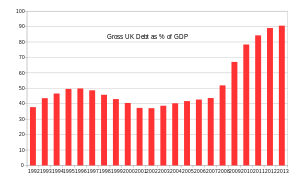
With wealth placing Australia as runners up, unsurprisingly neither factor was particularly decisive, though the wealth metric did see Germany and the Netherlands reach the semis. If UN Security Council membership was used, England would triumph.  Political importance doesn't improve footballing performance then.  Much to the likely chagrin of Greek, and southern European observers more generally, Germany does triumph under one economic metric - Standard and Poor rating.  Perhaps this puts a new complexion on the images of Angela Merkel celebrating with her nation's triumphant footballers.  And, if we were to believe that correlation leads to causation, adds new urgency to the need for Britain to get its national debt under control...


The Economist's Daily Chart on June 4th offered another attempt to predict the tournament.  They provided a 'probability circle' along with a straight bar graph of probability of winning the tournament, working on the premise that experience matters. The data was based on the outcome of every FIFA game since 1993 adjusted for ranking when the teams played each other and home advantage. Brazil were heavily favoured under this particularly soccernomic methodology, with a formidable 21% chance of lifting the cup. The Germans had only a 7.5% chance of winning the cup, and also only a 7.5% chance of getting past Brazil in the semis.  The Economist's prediction would suggest that Germany managed to play above the expected level, although it would seem more likely that they over-rated home advantage.  The use of historical data did also not fare well, perhaps suggesting they also over-estimated the role of path dependence - Spain were given a 7.6% chance of winning, marginally better than Germany, while Portgual were rated fourth on 6.9%.  England were perhaps more realistically rated at 3%, and Argentina at 6.4%, but the Netherlands were considered complete outsiders at 2.3%.  


As the outcome of a football match depends heavily on the players on the day, along with a dose of luck, trying to use the types of data that were used by the aforementioned tools to predict football matches seems in some ways to be a fool's errand. But it is an entertaining topic and we applaud these two attempts at soccer meters which have added greatly to the excitement and enjoyment of the 2014 FIFA World Cup. 

In conclusion - if you want to predict the tournament then it would surely be wiser to use the data that betting companies draw upon when calculating their odds, or better still to find out how Paul the Octopus did it in 2010! 


Tuesday, 15 July 2014

Fans as ambassadors

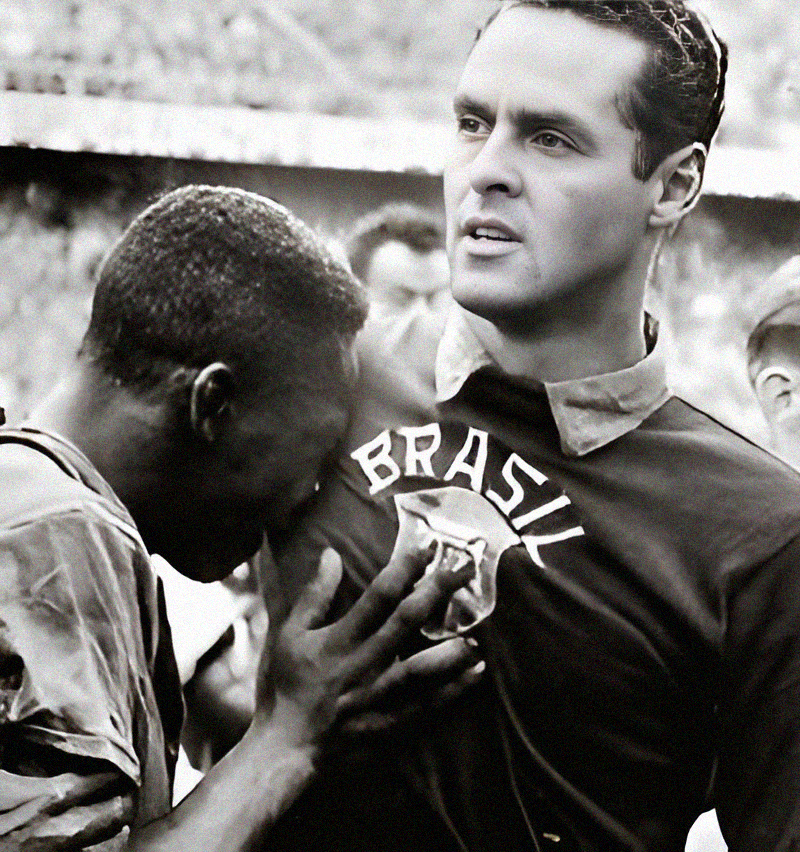
One argument for hosting global sports events such as the FIFA world cup is that the exposure can help to forge a positive image of the host country’s nation and culture (Sola, 1998).  Certainly, imagery of passionate Brazillian supporters creating a sea of yellow shirts in the stadia, cheering their team, and then crying and chewing up flags towards the end of the competition did much to reinforce stereotypes of a nation obsessed with football and its national team’s performance.

The same principal may also apply though to visiting supporters who act as unofficial/part-time ambassadors for their country.  You may, for example, have read in newspapers or websites about a reported tradition amongst a section of Japanese supporters who tidy up litter in stadiums after their team’s matches, using blue plastic bags.  According to The Wall Street Journal (2014) “The state government of Rio de Janeiro last week recognized those tidying efforts, holding a ceremony to thank fans of the Samurai Blue who cleaned up after matches.”

Closer to home (for us here in York, UK at least) football fans may remember Scotland’s ‘Tartan Army’ receiving The Belgian Olympic Committee’s annual Fair Play Prize for their sportsmanlike conduct at the Belgium v Scotland match in September 2001.  This built on a tradition for the Tartan Army, who had formed the Scotland Travel Club in 1980 to encourage responsible behaviour at away matches, following a series of violent clashes . Scotland fans went on to win awards for good conduct at the 1992 European Championships in Sweden and at the 1998 World Cup in France.


And as well as helping to publicise their country, fans might themselves benefit from media coverage – a 17 year-old Belgian fan was ‘discovered’ by beauty firm L’Oreal after a World Cup photo went viral (The Independent, 2014), although the company was soon forced to drop her after pictures of her on a hunting trip in Africa emerged on Twitter.


As one of the most important stakeholders in football – arguably those for whom the game exists – it is no surprise that media attention upon this group increases as media coverage of football events itself increases.  Hosting the world cup may create benefits in terms of national profile, but qualifying can also create similar benefits if your fans are well behaved.  Japan has promoted its image as a highly civilised and ordered society abroad – this may act as a spur to tourism and investment in that country.

Monday, 30 June 2014

Soccer Mad Boffins Comment on the FIFA 2014 World Cup in Brazil - Part 2

And so the knock-out stages of the 2014 FIFA World Cup have begun. Despite having the ‘home advantage’, Brazil (ranked third place in the FIFA rankings) were forced into a penalty shoot-out by Chile (ranked 14th).

Brazil are not the only nation to have faced testing opposition from supposed underdog opponents.  There are several notable absences from the ‘last sixteen’ thanks to one of the most (perhaps the most) exhilarating Group Stages of the competitions history. A series of high scoring games and shock results have served to remind us of what makes our sport so exhilarating - that any team can earn a result on their day.

I’ve been reminded on several occasions of Italia '90 where a Costa Rican team considered as something of a novelty embarrassed a supposedly superior Scotland team which comprised numerous ‘star players’ of the day.


Return to the present and Costa Rica are at it again. In the group stages they stunned Italy and dispatched a lackluster England team.  Italy looked awful because Costa Rica had balance, discipline, stamina, and tenacity, kept their formation and played a defensive game, man-marking and off-side trapping the Italians constantly, which frustrated them and ground them down. On any occasion that an Italian got the ball three Costa Rican's descended on him, then when Costa Rica went forward it was fluid - get the ball and immediately look for the next player to give it to, pass and move in short triangles up the pitch, keep possession and frustrate and tire the opposition. But it worked – and that's how you can win games when you aren't Brazil, England take note.

Also, watch the Costa Rican (and for that matter, the Chilean) coaches pacing the touchline and making sure the team keeps to the plan. Contrast with England, Italy and Spain whose coaches looked like dour, defeated men for 90 minutes, sat glumly watching their teams disintegrate.

Speaking as an Englishman, my observation is that our team seems to go into tournaments thinking that they are in the same bracket as the best teams, only to fail. When England played Italy, we made Italy look good because in reality we were an average side with few, if any of the qualities I attributed to Costa Rica in the previous paragraphs. We probably haven't been particularly good since about 1990 and the halcyon days of Butcher, Robson, Linekar, Shilton etc (or arguably 1996, where we did alright, but had a bit of luck and 'home advantage').

In contrast, Costa Rica have been a real talking point and last night beat Greece on penalties. Their football isn’t always pretty but they go into games knowing what they need to do, and deliver results.

In their book Soccernomics, Kuper and Szymanski pose the question are England really underachievers? Or is it just that the English population expect too much of them? They postulate about England’s achievements relative to their given resources and those of competing nations.

According to their analysis, England are one of the most experienced nations in football, and as a country has a relatively high financial income.  It is however a medium sized country.  When ranked on this basis, Kuper and Szymanski believe England’s peers are therefore Russia, Azerbijan, Morroco, Ivory Coast and Mozambique, rather than Brazil, Germany, and Argentina, etc.

When Kuper and Szymanski’s variables and the England football teams results are considered in relation to other footballing nations, it appears that between 1980 and 2001 they actually over-performed. Nowadays though they win plenty of friendlies but not enough ‘big ticket’ competitive matches in which they face much larger nations. 

If we believe the research then, England and the English should not expect to go into World Cups expecting to just go in and win the competition playing the sort of football that its squad of ‘star’/’household name’ players might whilst representing their respective leading Premiership clubs.  Instead, perhaps we ought to take a leaf out of Costa Rica’s book and approach the competition as underdogs, playing a more disciplined and well-drilled type of football where the sum of the whole is greater than the sum its parts.