Showing posts with label soccernomics. Show all posts

Wednesday, 28 August 2019

Financial Troubles at Football Clubs: York Festival of Ideas, and the cases of Middlesbrough, Bury and Bolton


Back in June it was our great privilege to present our research at York festival of Ideas.

We were involved with two sessions - the first, Chaired by Kevin, was a highly insightful presentation by Daniel Geey - a legal/business expert with significant experience in the football industry and has worked on a variety of club takeovers, high profile transfers, commercial endorsement deals and disputes. His talk centered around his book and was entitled 'Done Deal: Premier League Big Business' and generated much discussion from the audience about players, their agents, and tax issues - and some were also interested by the ethical implications that can arise. Thanks Daniel for a truly insightful presentation.


Next, we were both in conversation with best-selling investigative journalist and author, David Conn.


The event was notable for several reasons.

Firstly it was a first public appearence by Alex after experiencing serious illness earlier this year. Although he sat down for most of the event, getting out and in front of an audience was a big step forward in his recovery.

Secondly, sharing the 'stage' with David Conn was a real accomplishment.  On a personal level it was great to talk to him about our research, which has drawn on some of the facts an  ideas outlined in his books, particularly 'The Beautiful Game: Searching for the Soul of Football'.  Coincidently we were also undertaking our own research of the World Cup (and related to that, the history of FIFA) at around the same time as David was doing his own research, albeit more concerned with criticisms of the organization in its more recent form, and ultimately published in his 2017 book ''The Fall of the House of FIFA'.  


The talk began by Kevin outlining the work we have published, particularly the ideas of Shadow Hybridity and the Institutional Logic of Professional Sport, as outlined in our recent paper featured in Journal of Management History: 

Final published version (look it up via your university library): click here 

Accepted penultimate draft (unformatted document, freely available with no paywall): click here

Alex and Kevin then made links between our theories and the ideas presented in David's books about finance in football, and contrasting cash-strapped lower league teams, such as Middlesbrough in the mid-1980s with, premiership today's giants such as Manchester City and the concentration of wealth resulting in ever widening gaps between them and many teams of the lower leagues.

David responded passionately with detailed answers - he really cares about the subject matter - and has researched it thoroughly.

The things that we talked about that day struck a chord with the audience, many of whom had question and insightful comments to make about their own perceptions and experiences as fans.  

As some of you reading the will know, David Conn is a former student of University of York, the venue and a main organizer for the festival of Ideas.  After the event we took David for a walk around his old campus and enjoyed talking about the place.  Thanks David and also thanks to everyone at the Festival of Ideas team and the University of York for hosting our event, and to everyone who attended on the day for being a brilliant audience. Both of the football talks were free to attend but fully booked, so see you again next year, we hope, but book early!


David Conn revisits University of York (photo credit: Alex Gillett)


                                                                           ******


Reflections on Today's News

The last couple of days have brought these issues back into focus and our ideas about the institutional logic of professional sport have never seemed more pertinent, with Bury today being expelled from the league and Bolton Wanderers hanging on by a thread.  Two clubs with much history, including famous FA Cup wins.  

As Bury and Bolton, once proud Lancashire towns, have been consumed Pac-Man like by the 'Greater Manchester' metropolitan area, their economies as well as their football clubs appear to have declined financially, if not always so on the pitch (Bury were only just promoted this summer and Bolton have for many years been a bit of a 'yo yo' team but tend to pivot around the second tier)- whilst those of the dominant geography (ie the city of Manchester) have experienced what seems to the outsider to be a concentration of inward investment, and glory (United and City are both now globally recognized brands- and City won a clean sweep of domestic honors last year). 

Even Salford, a former dockland area (in the shadow of Old Trafford in one direction and the National football Museum in another) but newly revived by the arrival of the BBC at 'Media City' in 2011, now have a team competing professionally in the English Football League.  

Salford City FC is  buoyed financially by a consortium ex-Manchester United players' who seemingly preferred to 'start from scratch' and begin a new generation by taking a non-league club (as it was when they invested) into the league (where it is now), rather than take on the baggage of an established local league club with an existing fan base, but also the weight of history and the albatross of debt.  

For example the Neville brothers (Phil and Gary) have a combined ownership stake in the Salford Club of 20% according to Wikipedia - whilst by way of contrast their mother Judy worked as Bury FCs club secretary until recently, and their late father was at one time on the Bury FC Board of Directors (according to the BBC).  

As we outline in our paper, fans want to win and professional football clubs demand more and more money in order to retain their professional status.  Without constant investment and the promise of 'being in with a chance of promotion/winning the cup' will eventually lead to many paying fans deserting in their droves, and also lead to extra expense from 'sacking' managers, player wages and fees etc, to attract talent in the hope of turning things around. Maintaining professional status in order to be narrow the odds of achieving glory, creating a 'buzz' and attracting sponsors and television money, to re-invest in more players and stadiums seems to be the cycle of events time and again - only for some clubs that cycle becomes a death spiral, particularly if owners' laden more debts onto the club, for example by diversifying into sports halls/public gyms, hotels, or to subsidize some of their other business interests. 

We wish Bury and Bolton the very best of luck for the future, and hope that the precedents set by others such as Middlesbrough (which escaped by the skin of their teeth in 1986), and Accrington Stanley (which reformed after leaving the league in the 1960s - eventually returning in 2006 and now comfortably placed in League 1.)  

More closely to home we also hope that York City can capitalize on their strong start to the season and climb back up the pyramid soon.  It has been a turbulent few years for York and it would be great to eventually have League football at the new stadium when it is eventually opened.


Monday, 16 July 2018

Soccer Mad Boffins Analysis Described by Stefan Szymanski as "A Teachable Moment"

Praise indeed from Stefan Szymanski, co-author of Soccernomics, in response to our recent blog posts about predicting results and outcomes of the 2018 FIFA World Cup:


Writing on the social network media Twitter, Szymsnski refers to our 'experiment' as 'very nice - teachable moment'.

Thank you Stefan 😀

The blog posts are a bit of fun more than scientifically rigorous research, but we hope that our loyal readers agree that they do raise some interesting points that could be used when teaching about research methods, statistical predictions, and the soccer world cup.


Thursday, 26 October 2017

Soccer Mad Boffins in Moneyweek Magazine


Excellent new article about investment in football published in the UKs best selling financial magazine, Moneyweek. Written by Mathew Partridge, the article includes quotes from us two Soccer Mad Boffins (Dr Alex G. Gillett and Dr Kevin D. Tennent) as well as Professor Stefan Szymanski (author of the bestseller 'Soccernomics') and Professor Ignacio Palacios-Huerta (professor of management, economics, and strategy at the London School of Economics and a member of the board of the Spanish top-flight club Athletic Club de Bilbao.

Read the article for free by clicking on the link below:

https://moneyweek.com/share-tips-how-to-invest-in-football/

Saturday, 2 August 2014

The Guessing Game: Soccermeters Revisited

With the dust from the 2014 FIFA World Cup having settled the opportunity to revisit the 'soccermeters' published in the phoney war before the World Cup presents itself. These tools appeared as office timewasters in the weeks before the tournament with a mission to keep fans entertained before the big event got under way.  How did these now forgotten tools get on at predicting the outcome of the tournament?


Slate.com offered this soccermeter which eliminated teams from the competition on the basis of various footballing and non-footballing metrics. Footballing metrics seem roughly to fare better, 'tournament history' having predicting Brazil as winner, but Germany getting eliminated in the semis - although Italy were expected to face Brazil in the final. Slate also told us that Brazil would win on odds, although they would eliminate Germany in the semis and face Argentina in the final.  Germany's 7-1 victory over Brazil certainly stunned the betting markets. FIFA ranking proved a completely inaccurate predictor, placing Spain as winners, though at least they were expected to face Germany.  Under this model, however, Argentina would have been eliminated in the quarters and the Netherlands dropped out in the group stages.  


The Women's Soccer metric showed, perhaps, how far behind the 'established' nations are in women's football, with the United States predicted to win, although beating Germany in the final - England and Japan being expected to reach the semis! Economic indictors also favoured the US, placing the nation top in terms of wealth (on GDP per capita terms) and population.  


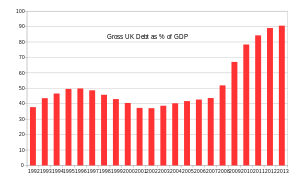
With wealth placing Australia as runners up, unsurprisingly neither factor was particularly decisive, though the wealth metric did see Germany and the Netherlands reach the semis. If UN Security Council membership was used, England would triumph.  Political importance doesn't improve footballing performance then.  Much to the likely chagrin of Greek, and southern European observers more generally, Germany does triumph under one economic metric - Standard and Poor rating.  Perhaps this puts a new complexion on the images of Angela Merkel celebrating with her nation's triumphant footballers.  And, if we were to believe that correlation leads to causation, adds new urgency to the need for Britain to get its national debt under control...


The Economist's Daily Chart on June 4th offered another attempt to predict the tournament.  They provided a 'probability circle' along with a straight bar graph of probability of winning the tournament, working on the premise that experience matters. The data was based on the outcome of every FIFA game since 1993 adjusted for ranking when the teams played each other and home advantage. Brazil were heavily favoured under this particularly soccernomic methodology, with a formidable 21% chance of lifting the cup. The Germans had only a 7.5% chance of winning the cup, and also only a 7.5% chance of getting past Brazil in the semis.  The Economist's prediction would suggest that Germany managed to play above the expected level, although it would seem more likely that they over-rated home advantage.  The use of historical data did also not fare well, perhaps suggesting they also over-estimated the role of path dependence - Spain were given a 7.6% chance of winning, marginally better than Germany, while Portgual were rated fourth on 6.9%.  England were perhaps more realistically rated at 3%, and Argentina at 6.4%, but the Netherlands were considered complete outsiders at 2.3%.  


As the outcome of a football match depends heavily on the players on the day, along with a dose of luck, trying to use the types of data that were used by the aforementioned tools to predict football matches seems in some ways to be a fool's errand. But it is an entertaining topic and we applaud these two attempts at soccer meters which have added greatly to the excitement and enjoyment of the 2014 FIFA World Cup. 

In conclusion - if you want to predict the tournament then it would surely be wiser to use the data that betting companies draw upon when calculating their odds, or better still to find out how Paul the Octopus did it in 2010! 


Tuesday, 15 July 2014

Fans as ambassadors

One argument for hosting global sports events such as the FIFA world cup is that the exposure can help to forge a positive image of the host country’s nation and culture (Sola, 1998).  Certainly, imagery of passionate Brazillian supporters creating a sea of yellow shirts in the stadia, cheering their team, and then crying and chewing up flags towards the end of the competition did much to reinforce stereotypes of a nation obsessed with football and its national team’s performance.

The same principal may also apply though to visiting supporters who act as unofficial/part-time ambassadors for their country.  You may, for example, have read in newspapers or websites about a reported tradition amongst a section of Japanese supporters who tidy up litter in stadiums after their team’s matches, using blue plastic bags.  According to The Wall Street Journal (2014) “The state government of Rio de Janeiro last week recognized those tidying efforts, holding a ceremony to thank fans of the Samurai Blue who cleaned up after matches.”

Closer to home (for us here in York, UK at least) football fans may remember Scotland’s ‘Tartan Army’ receiving The Belgian Olympic Committee’s annual Fair Play Prize for their sportsmanlike conduct at the Belgium v Scotland match in September 2001.  This built on a tradition for the Tartan Army, who had formed the Scotland Travel Club in 1980 to encourage responsible behaviour at away matches, following a series of violent clashes . Scotland fans went on to win awards for good conduct at the 1992 European Championships in Sweden and at the 1998 World Cup in France.


And as well as helping to publicise their country, fans might themselves benefit from media coverage – a 17 year-old Belgian fan was ‘discovered’ by beauty firm L’Oreal after a World Cup photo went viral (The Independent, 2014), although the company was soon forced to drop her after pictures of her on a hunting trip in Africa emerged on Twitter.


As one of the most important stakeholders in football – arguably those for whom the game exists – it is no surprise that media attention upon this group increases as media coverage of football events itself increases.  Hosting the world cup may create benefits in terms of national profile, but qualifying can also create similar benefits if your fans are well behaved.  Japan has promoted its image as a highly civilised and ordered society abroad – this may act as a spur to tourism and investment in that country.

Monday, 30 June 2014

Soccer Mad Boffins Comment on the FIFA 2014 World Cup in Brazil - Part 2

And so the knock-out stages of the 2014 FIFA World Cup have begun. Despite having the ‘home advantage’, Brazil (ranked third place in the FIFA rankings) were forced into a penalty shoot-out by Chile (ranked 14th).

Brazil are not the only nation to have faced testing opposition from supposed underdog opponents.  There are several notable absences from the ‘last sixteen’ thanks to one of the most (perhaps the most) exhilarating Group Stages of the competitions history. A series of high scoring games and shock results have served to remind us of what makes our sport so exhilarating - that any team can earn a result on their day.

I’ve been reminded on several occasions of Italia '90 where a Costa Rican team considered as something of a novelty embarrassed a supposedly superior Scotland team which comprised numerous ‘star players’ of the day.


Return to the present and Costa Rica are at it again. In the group stages they stunned Italy and dispatched a lackluster England team.  Italy looked awful because Costa Rica had balance, discipline, stamina, and tenacity, kept their formation and played a defensive game, man-marking and off-side trapping the Italians constantly, which frustrated them and ground them down. On any occasion that an Italian got the ball three Costa Rican's descended on him, then when Costa Rica went forward it was fluid - get the ball and immediately look for the next player to give it to, pass and move in short triangles up the pitch, keep possession and frustrate and tire the opposition. But it worked – and that's how you can win games when you aren't Brazil, England take note.

Also, watch the Costa Rican (and for that matter, the Chilean) coaches pacing the touchline and making sure the team keeps to the plan. Contrast with England, Italy and Spain whose coaches looked like dour, defeated men for 90 minutes, sat glumly watching their teams disintegrate.

Speaking as an Englishman, my observation is that our team seems to go into tournaments thinking that they are in the same bracket as the best teams, only to fail. When England played Italy, we made Italy look good because in reality we were an average side with few, if any of the qualities I attributed to Costa Rica in the previous paragraphs. We probably haven't been particularly good since about 1990 and the halcyon days of Butcher, Robson, Linekar, Shilton etc (or arguably 1996, where we did alright, but had a bit of luck and 'home advantage').

In contrast, Costa Rica have been a real talking point and last night beat Greece on penalties. Their football isn’t always pretty but they go into games knowing what they need to do, and deliver results.

In their book Soccernomics, Kuper and Szymanski pose the question are England really underachievers? Or is it just that the English population expect too much of them? They postulate about England’s achievements relative to their given resources and those of competing nations.

According to their analysis, England are one of the most experienced nations in football, and as a country has a relatively high financial income.  It is however a medium sized country.  When ranked on this basis, Kuper and Szymanski believe England’s peers are therefore Russia, Azerbijan, Morroco, Ivory Coast and Mozambique, rather than Brazil, Germany, and Argentina, etc.

When Kuper and Szymanski’s variables and the England football teams results are considered in relation to other footballing nations, it appears that between 1980 and 2001 they actually over-performed. Nowadays though they win plenty of friendlies but not enough ‘big ticket’ competitive matches in which they face much larger nations. 

If we believe the research then, England and the English should not expect to go into World Cups expecting to just go in and win the competition playing the sort of football that its squad of ‘star’/’household name’ players might whilst representing their respective leading Premiership clubs.  Instead, perhaps we ought to take a leaf out of Costa Rica’s book and approach the competition as underdogs, playing a more disciplined and well-drilled type of football where the sum of the whole is greater than the sum its parts.